
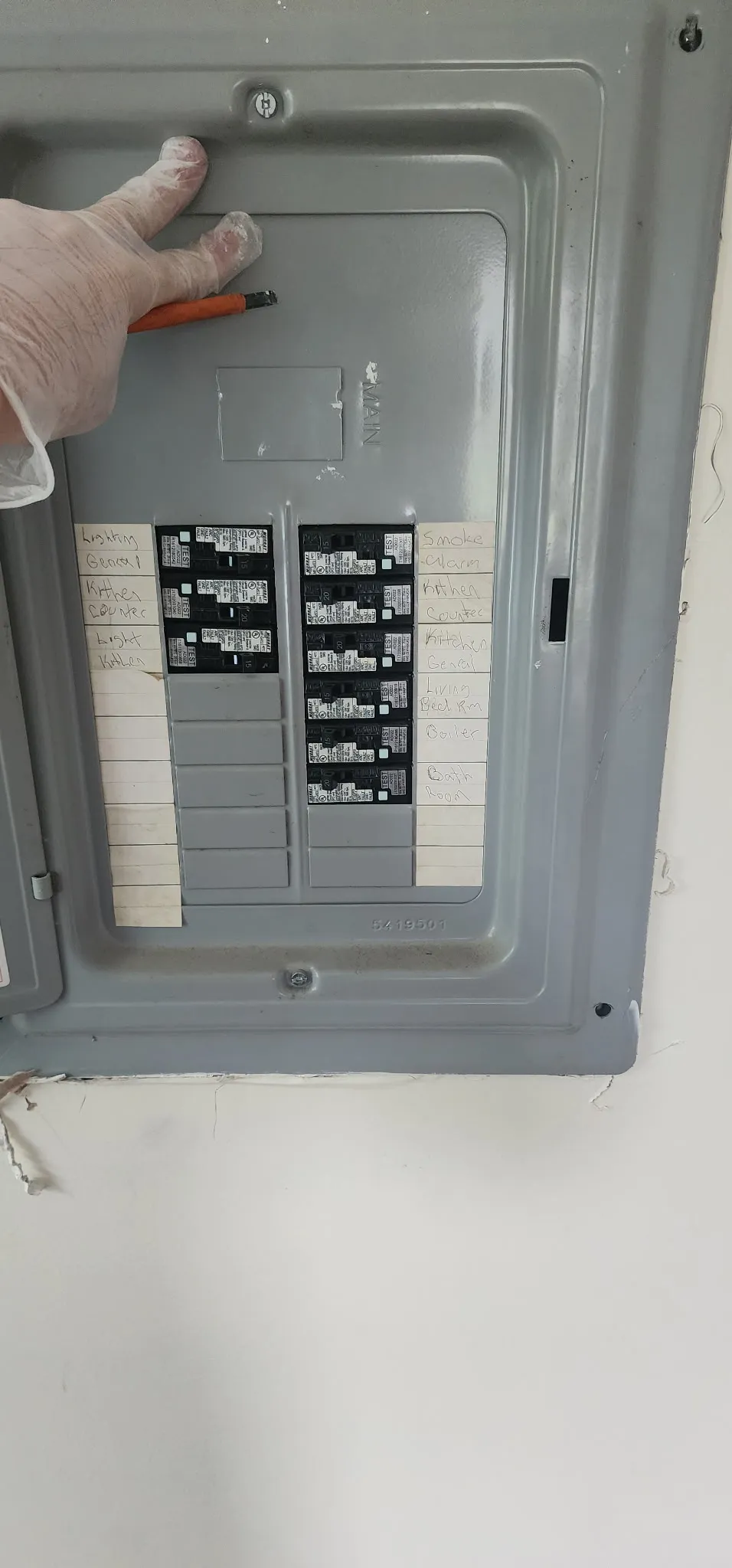
A tripping breaker means your panel is protecting a circuit from more current than it can safely carry, and in an older Boston home the cause is almost always one of four things. Overload, a short circuit, a ground fault, or a breaker that’s simply worn out — each one trips a little differently, and each one calls for a different response.
The Four Reasons a Breaker Trips
Overload is the most common by far, especially in houses wired decades before anyone owned a microwave, a space heater, and a hair dryer at the same time. Too many devices pulling power on one circuit trips the breaker as a safety valve, not a malfunction.
A short circuit happens when a hot wire touches a neutral wire or bare metal somewhere it shouldn’t — inside an outlet, a fixture, or a wall. Shorts tend to trip the breaker instantly and trip it again the moment you reset it, because the fault is still sitting there waiting.
A ground fault is current escaping to an unintended path to ground, often through damaged insulation, a damp basement, or a compromised outdoor outlet. It behaves a lot like a short but usually points to moisture or aging insulation as the root cause.
A worn breaker is the quiet one. After enough years and enough trips, the internal mechanism weakens and starts tripping under loads it used to handle without issue. This one is easy to misdiagnose as an overload, because from the outside it looks the same.
Triple-Decker Circuits Weren’t Built for This
Boston’s triple-deckers were wired for a different era, often with each floor sharing a small handful of circuits meant for lighting and the occasional radio, not for modern kitchens and bedrooms full of electronics. Add a window AC unit in July or a space heater in a drafty bedroom come fall, and a circuit that’s carried decades of ordinary use without complaint suddenly can’t keep up. That’s not a defect in the house — it’s a mismatch between wiring laid down generations ago and how a household actually runs today. It’s a pattern we see constantly across East Boston and the surrounding triple-decker stock.
When a Tripping Breaker Is an Emergency
Most tripping breakers are an inconvenience: reset it, unplug something, move on with your evening. A few signs mean stop and call now instead. A burning smell near the panel or an outlet. A breaker or panel that feels warm or hot to the touch. Buzzing, crackling, or sparking anywhere near the panel. A breaker that won’t stay reset no matter what you unplug. Any of those point to heat building up somewhere it shouldn’t, and that’s not something to sit on overnight.
What a Licensed Electrician Actually Checks
A real diagnosis starts at the panel — which circuit is tripping, how often, and under what load — then follows the circuit outward if the answer isn’t obvious. That means testing for shorts and ground faults with proper equipment, inspecting the outlets and fixtures the circuit feeds, and checking the breaker itself for wear against its rated load. In a triple-decker, it often means mapping out what’s actually connected to each circuit, because the handwritten panel labels from decades ago rarely match what’s plugged in today. Every panel is different, which is why a real quote follows a real look, not a guess over the phone.
Leave the Panel to a Professional
Resetting a breaker yourself is fine. Opening the panel, tracing a hot wire through a wall, or working near a live circuit to find a short is not something to take on yourself — that’s live electrical work, and it’s exactly what a licensed electrician (EMC holds Massachusetts Journeyman Electrician license 56576B) is trained and insured to handle safely. If a breaker keeps tripping more than once or twice, call 617-895-8625 and get it looked at before a nuisance turns into something worse.