
General Contracting — Porch and Deck Rebuilds
A Porch Rebuild That Fixes The Framing, Not Just The Decking
Licensed and Insured
MA Journeyman Electrician 56576B · CSL-120231 · HIC-21274.
Upfront Pricing
A straight scope and an honest price before any work starts.
Same-Day May Be Available
Same-week is normal — call for real emergencies.
Why Triple-Decker Porches Rot From The Frame Out
Decking is what you walk on, but it's usually not what fails first. Water gets behind the ledger board where the porch meets the house, pools at the tops of posts, and works into stair stringers — all of it hidden under or behind boards that can look perfectly fine from the top. A porch that feels soft underfoot or a railing that moves when you lean on it is often years past a resurfacing fix; by the time it's noticeable, the framing underneath has usually been compromised for a while.
How EMC Approaches A Rebuild
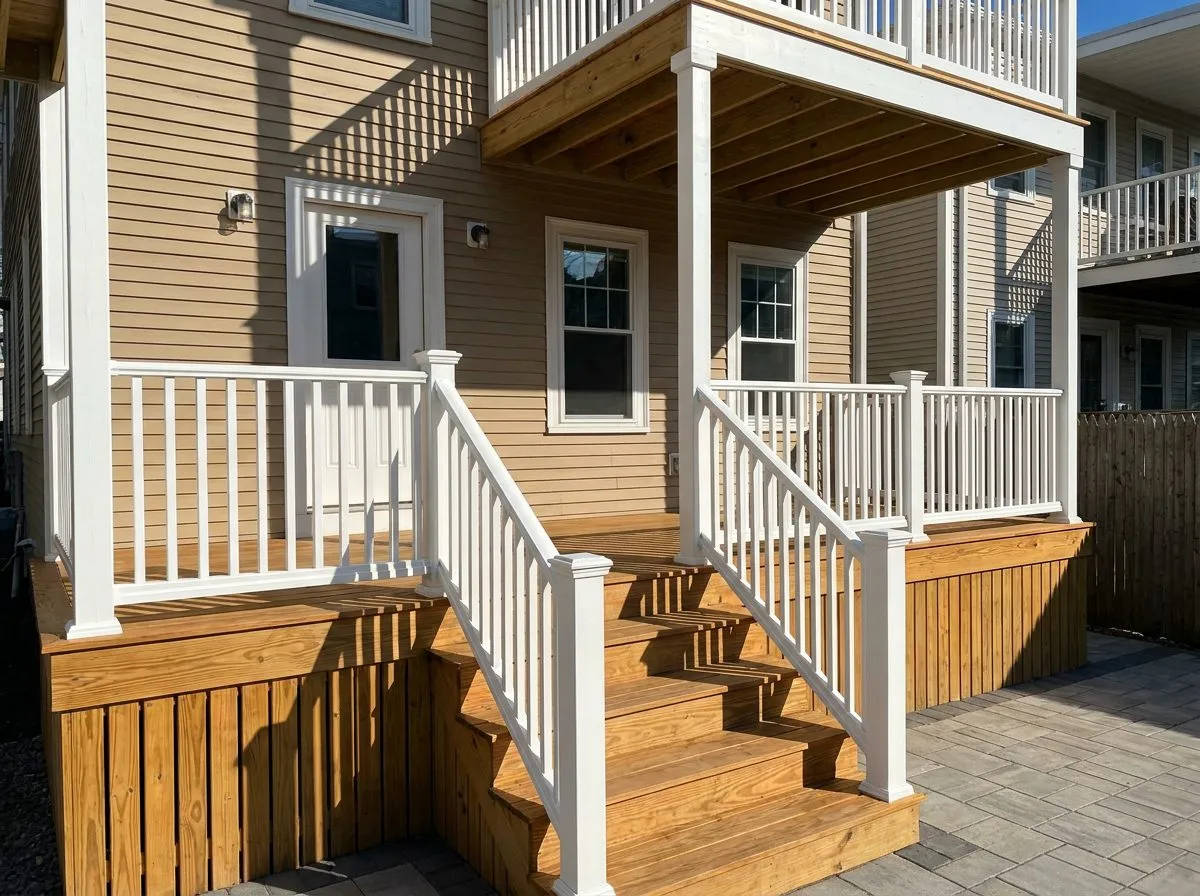
EMC opens up the porch to see what the framing actually looks like before pricing anything — a rebuild scoped from a walkthrough of visible decking alone is a guess, not a real number. The work runs under Massachusetts Construction Supervisor License CSL-120231, with a permit pulled for the structural work and the finished porch inspected before it's signed off. Structure, decking, rails, and stairs get brought up to current code, not just resurfaced over a frame that's still failing underneath.
NEED AN ELECTRICIAN WHO CAN HANDLE ALL OF IT?
One call covers the wiring, the heat, and the whole remodel.
What Actually Drives The Cost
How much of the framing turns out to be compromised once it's opened up is the single biggest factor — a porch that needs a few posts and a ledger repair is a different job than one that needs full structural replacement. Height matters too: a second- or third-floor triple-decker porch carries more structural and safety requirements than a ground-floor deck. Materials and finish choices move the number from there, but the honest answer only comes after we've seen what's actually holding the porch up.
What Condo Associations And Insurers Want To See
A porch on a triple-decker condo building is usually common-area or shared structure, which means association sign-off before work starts and documentation afterward — permits pulled, work inspected, and a record the board can point to. Insurers pay attention to porch condition too, and a soft deck or a loose railing found during underwriting or a claim can complicate a policy. A permitted, code-compliant rebuild with paperwork behind it is what both a condo board and an insurance carrier want to see, not a fresh coat of paint over the same problem.
Why This Is CSL-Supervised Work, Not A Resurfacing Job
Swapping decking boards over rotten framing hides the problem instead of fixing it, and a porch that fails structurally isn't a small accident. Massachusetts requires a Construction Supervisor License to oversee structural work like this, and EMC holds CSL-120231 — the rebuild is supervised, permitted, and inspected, not handed to an unlicensed crew chasing a lower bid.
ANSWERS
COMMON QUESTIONS
My porch decking looks fine — why would I need a rebuild?
Rot usually starts in the framing hidden under or behind the decking, not in the boards you can see. Decking can look solid while the ledger, posts, or stringers underneath are already compromised — a walkthrough that opens up a few areas tells the real story.
Will my condo association need to approve this?
Usually, yes. Porches on triple-decker condo buildings are typically common or shared structure, so association sign-off and documentation are part of the process — we coordinate that alongside the actual work.
Do you just replace the decking, or the structure too?
It depends on what we find once the porch is opened up. Sometimes the framing is sound and it's a decking-and-rail job; often the structure needs work too. We tell you honestly after inspecting, not before.
Do you need a permit for a porch rebuild?
Yes. Structural work like this requires a permit — EMC pulls it under CSL-120231 and gets the finished rebuild inspected before calling it done.
NEED AN ELECTRICIAN WHO CAN HANDLE ALL OF IT?
One call covers the wiring, the heat, and the whole remodel.