
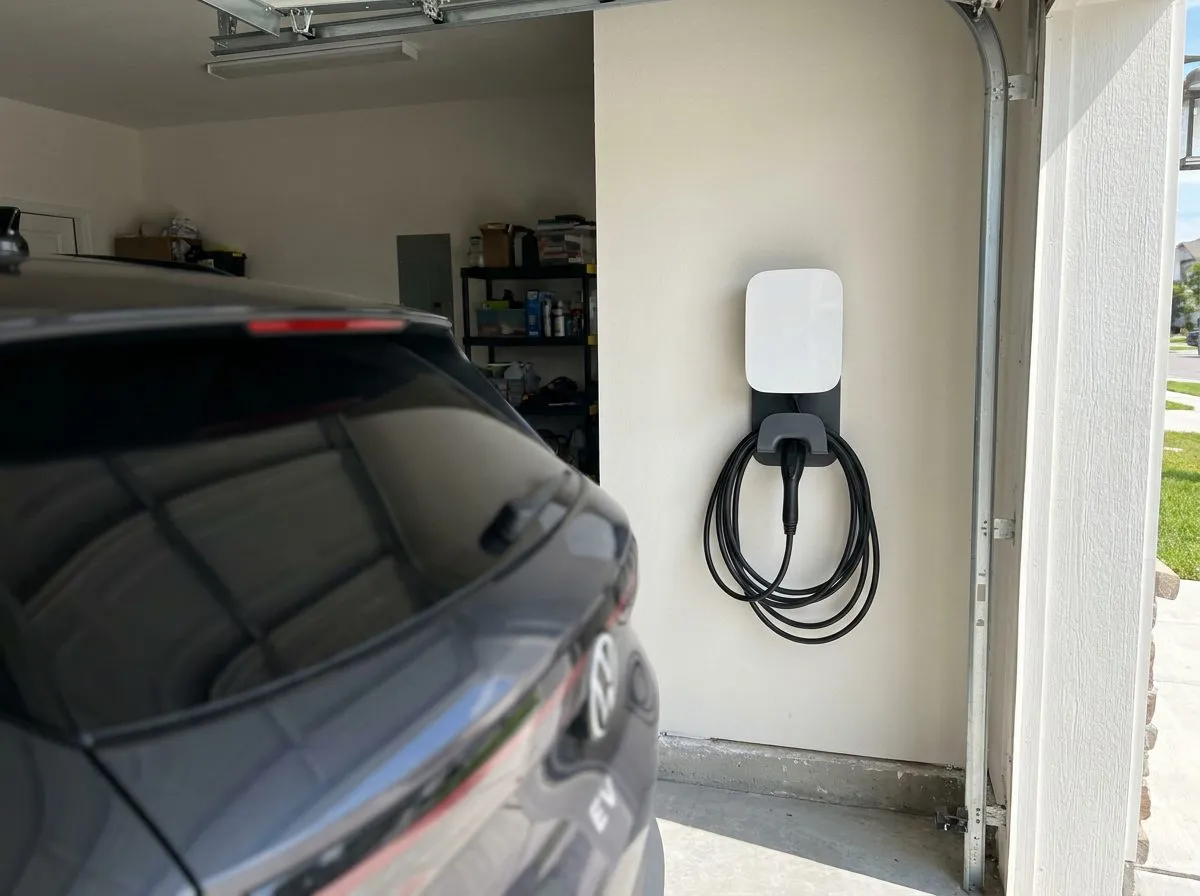
EV charger installation for a Boston home starts with one question before anything else: does your electrical panel have the capacity to add it? A Level 2 charger draws enough continuous power that panel capacity, not the charger itself, is usually what determines cost and feasibility.
Level 1 vs. Level 2
Level 1 charging uses a standard household outlet and adds range slowly — often enough for a driver with a short commute who plugs in every night, but too slow for anyone who wants a meaningful top-up in a few hours. Level 2 charging runs on a 240-volt circuit, similar to what powers a dryer, and adds range several times faster. Most homeowners who drive daily end up choosing Level 2 for the flexibility, but Level 1 remains a legitimate, cheaper option for lower-mileage drivers who aren’t in a hurry. There’s no wrong answer here — it’s a question of how you actually drive, not which option sounds more impressive.
The Panel Capacity Question Comes First
A Level 2 charger needs a dedicated circuit sized for continuous, hours-long draw — not a quick burst like a microwave, but a steady pull for as long as the car is charging. On a panel that’s already full or undersized for the house’s other loads, adding that circuit may mean a panel upgrade before the charger conversation even starts. This is the single biggest driver of cost variation between one EV charger installation and the next, and it’s exactly why an in-person look at your panel matters more than the model of charger you’re considering.
Street Parking vs. Driveways and Deeded Spots
Boston’s parking reality shapes this project as much as the electrical does. A driveway or an attached garage makes installation straightforward — run the circuit to a wall-mounted charger near where the car sits. Street parking, which is how a lot of triple-decker households park, generally rules out home charging altogether, since you can’t run a permanent charging cable across a public sidewalk. If you have a deeded off-street spot, even a small one, that usually opens the door to a real installation; without one, the practical options shift toward workplace or public charging infrastructure instead. It’s worth being honest with yourself about your actual parking situation before spending money on an electrical estimate for a spot you can’t reliably use.
The Condo-Association Route
Condo owners face an extra layer: shared electrical infrastructure and a board or association that has to sign off on any modification to common areas, even a charger feeding an individually owned spot. That conversation covers who pays for the circuit, how the load gets billed, and whether the building’s overall electrical capacity supports charger installations for one unit or several. It’s worth raising early, before you’ve picked a charger, because the association’s answer shapes what’s actually possible.
Get the Panel Checked Before You Buy a Charger
The charger itself is the easy part of this decision — the panel capacity, parking situation, and any condo approval are what actually determine feasibility and cost. A licensed electrician can look at your panel, your parking, and your driving pattern in one visit and tell you honestly what’s realistic. And however capable you are with a screwdriver, running a 240-volt circuit into your panel is licensed electrical work — EMC holds Massachusetts Journeyman Electrician license 56576B and pulls the permit every time, so leave the wiring itself to a professional.