
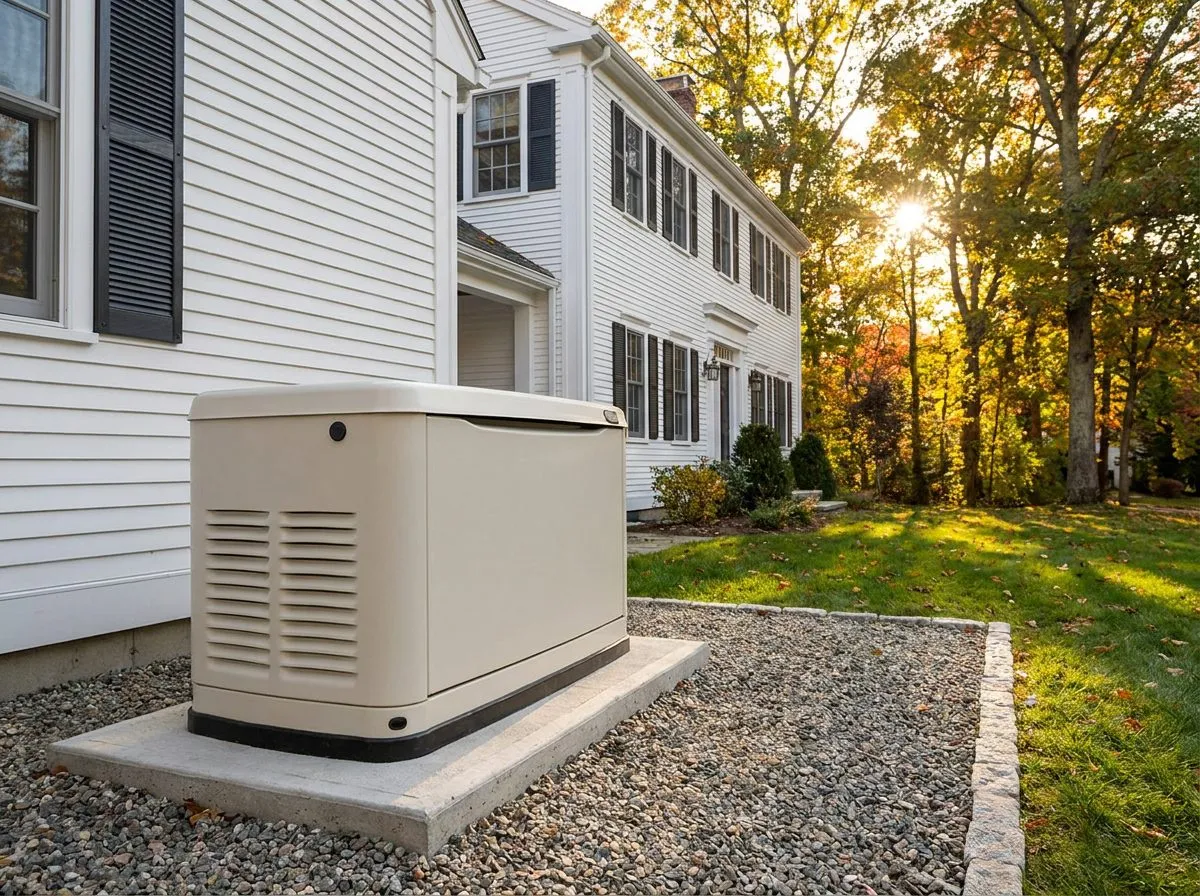
Generator options for a Boston home come down to two basic paths: a portable generator paired with a properly installed interlock kit, or a permanent standby system that starts automatically when the power drops. Which one makes sense depends on how often you lose power, what you need to keep running, and your budget.
Portable Plus Interlock
A portable generator is the lower-cost entry point — you store it, roll it out during an outage, and connect it. The critical piece most people skip is the interlock kit: a mechanical safety device installed in your electrical panel that physically prevents the main utility breaker and the generator breaker from being on at the same time. Without it, connecting a generator directly risks backfeeding electricity into the utility lines, which is dangerous for utility workers and against code for good reason. An interlock kit is a relatively affordable addition to a portable generator setup and turns an unsafe workaround into a legitimate, safe connection.
Standby Systems
A standby generator is permanently installed outside the house, connected to your home’s fuel supply, and wired through an automatic transfer switch that detects an outage and starts the generator without you doing anything. It costs considerably more than a portable setup but removes the need to manually connect anything during a storm, which matters if you’re not home when the power goes out or simply don’t want to deal with hauling equipment in bad weather.
What Outages Actually Do to Sump Pumps and Freezers
The real cost of an outage in a Boston winter or during a storm often isn’t the inconvenience of no lights — it’s a sump pump that stops running during heavy rain and lets a basement flood, or a freezer full of food that spoils over a multi-day outage. Sizing a generator around these specific risks, rather than trying to power the whole house, is often the more practical and affordable approach for a household that mainly wants to protect against the worst outcomes of losing power.
Sizing Reality
There’s no one-size answer — sizing depends on exactly what you want powered during an outage, from just the sump pump and refrigerator up to running most of the house including heat. A generator sized too small won’t handle your actual critical loads when it matters; one sized too large costs more than necessary. The only reliable way to size it correctly is a load calculation based on your actual home and priorities, not a generic recommendation off a shelf tag.
Permit Note
Both interlock kits and standby systems typically require permitted electrical work, and standby systems often add fuel line connections and equipment pads that bring in additional permitting. That process protects you — it means the connection between your generator and your home’s electrical system has been checked by someone independent, which matters given the backfeed risk involved in getting this wrong.
This Is Licensed Work, Start to Finish
Generator installation, whether a portable interlock kit or a full standby system, involves working inside your electrical panel and creating a connection that can backfeed the utility grid if it’s done incorrectly — that’s not a project for a determined homeowner with a manual. A licensed electrician can size, install, and permit the setup that actually fits your home and your outage risks.