
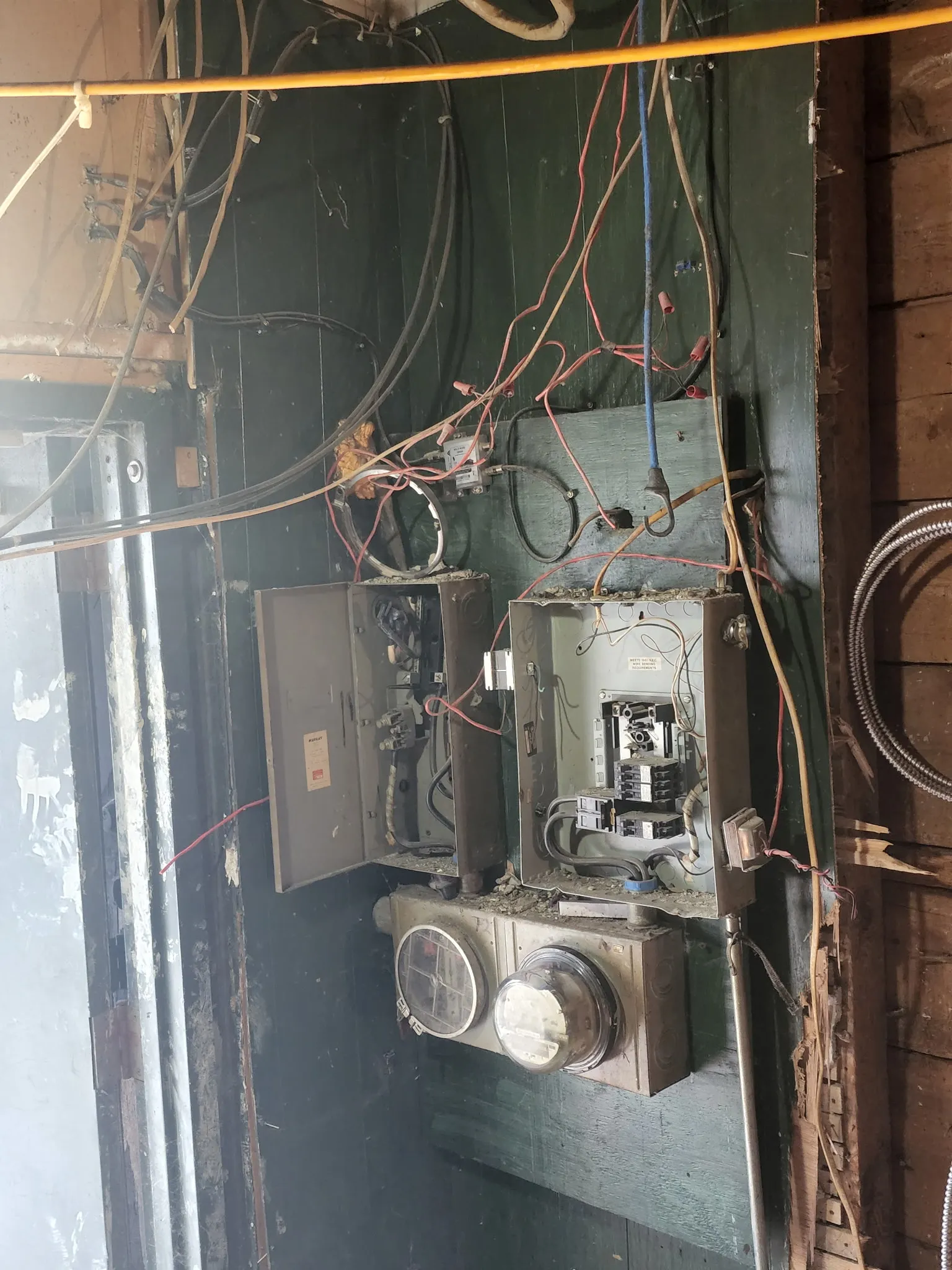
Knob-and-tube wiring is an early electrical system that runs individual wires through ceramic knobs and tubes instead of a single sheathed cable, and it’s still sitting behind plaster in a meaningful share of Boston’s older triple-deckers. It isn’t automatically a hazard, but it wasn’t designed for how a modern household uses electricity, and that gap is exactly what an inspection needs to sort out.
What It Actually Is
Knob-and-tube dates back to a period when houses drew far less power than they do now — a few lights, maybe a radio. Each insulated wire runs separately, held off framing by ceramic knobs and passed through walls via ceramic tubes, with no grounding conductor at all. That absence of a ground is one of the bigger practical differences from modern wiring, along with the fact that the insulation on the wire itself has had decades to dry out and become brittle.
Why It’s Still Behind Boston Plaster
Triple-deckers built in waves across East Boston and similar neighborhoods often kept their original wiring through generations of ownership, especially in sections that were never opened up for a full renovation. Plaster walls and horsehair lath make knob-and-tube expensive to access without real demolition, so it frequently survives in ceilings, attic runs, and walls that later remodels didn’t touch. Finding it during a renovation or an inspection is common, not unusual.
The Insurance Angle
This is where knob-and-tube stops being a historical curiosity and starts being a practical problem. Many insurance carriers in Massachusetts either won’t write a policy on a house with active knob-and-tube or require replacement within a set period after the policy starts. Some mortgage lenders ask about it too. Whether or not the wiring itself is currently causing issues, the insurance and financing consequences are real and worth checking before they become a surprise at closing or renewal.
The Replacement Process
Replacing knob-and-tube is permitted work — a licensed electrician pulls the permit, runs new grounded wiring to code, and the finished job gets inspected before it’s signed off. That inspection step matters: it’s independent confirmation the new wiring is safe, not just a contractor’s word for it. Depending on wall and ceiling access, some replacement can be done with minimal plaster damage by fishing new wire through existing paths; other sections may need to be opened up and patched.
Living Through a Rewire
A rewire is disruptive but usually livable — most homeowners stay in the house while it happens, room by room, with power interruptions scheduled rather than constant. Expect some dust, some patched plaster or drywall that needs paint touch-up, and a few days where a room or two is off-limits while walls are open. It’s a real project, not a weekend job, and every house’s scope is different — a real quote comes from a real walkthrough of what’s actually behind your walls, not a phone estimate.
This Isn’t a DIY Situation
Knob-and-tube’s lack of grounding and brittle old insulation make it genuinely unforgiving to work on without training — a wire that looks intact can fail the moment it’s disturbed. Leave tracing, testing, and replacing it to a licensed electrician. EMC holds Massachusetts Journeyman Electrician license 56576B and pulls permits on every rewire, so the work is inspected and documented, not just done and hoped for.