
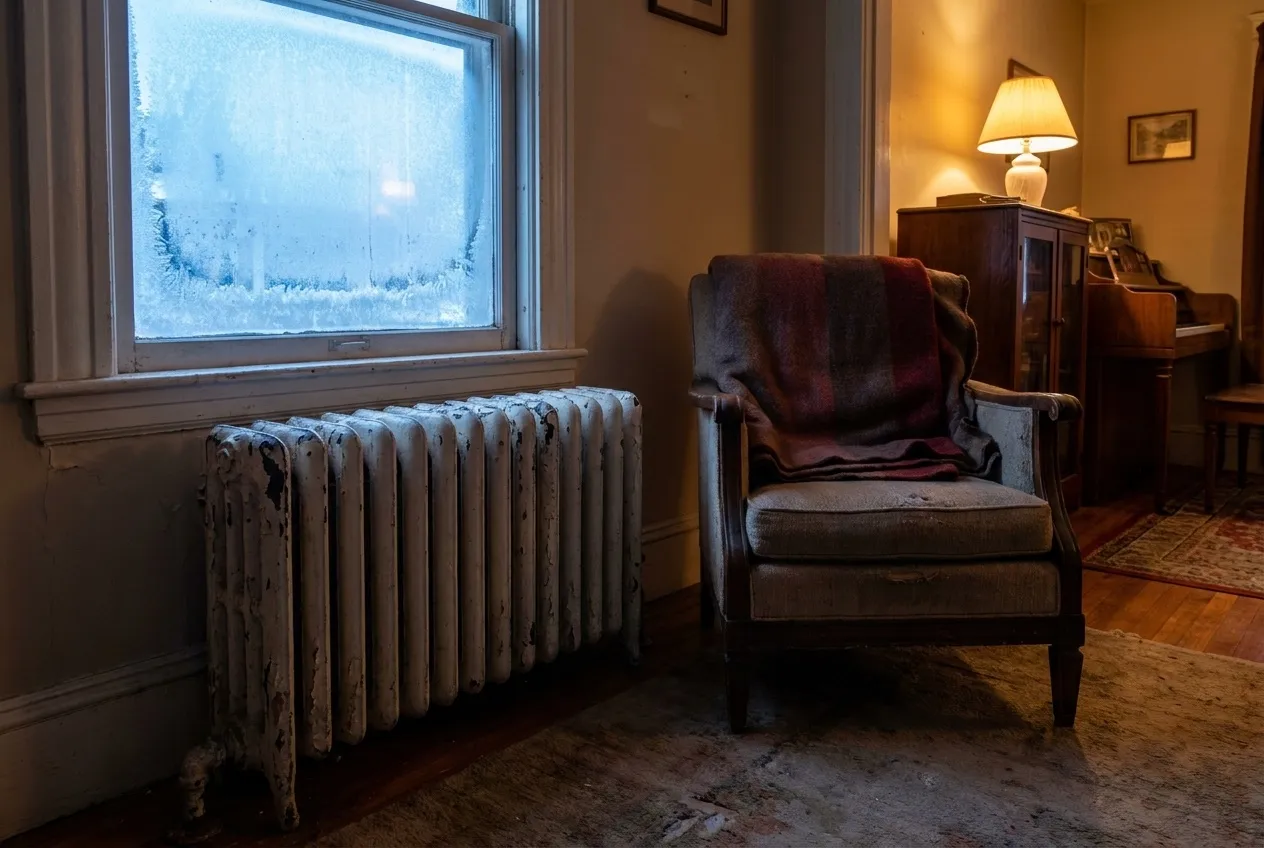
No heat usually means one of a few things: the thermostat, a switch, a tripped breaker, or the heating equipment itself, roughly in that order of likelihood. Before assuming the furnace or boiler has failed outright, a few safe checks can rule out the simpler causes in minutes.
What You Can Safely Check Yourself
Start with the thermostat — confirm it’s set to heat, the temperature is actually above room temperature, and the display has power (replace batteries if it uses them). Next, check for a dedicated service switch near the furnace or boiler, often a simple wall switch that looks like a light switch; it’s easy to bump off during cleaning or storage. Then check your electrical panel for a tripped breaker feeding the heating system — reset it once, and if it holds, you may be back in business. None of this requires opening equipment or touching anything electrical beyond a breaker or a switch, and all of it is safe for a homeowner to check.
When It’s a Repair Call
If the thermostat, switch, and breaker check out and you still have no heat, it’s time to call. Common repair-level issues include a failed igniter or pilot assembly, a bad motor, a faulty control board, or refrigerant issues on a heat pump system. None of these are things to diagnose by ear or guesswork — the symptoms for very different problems can look identical from the outside, which is exactly why a proper diagnostic visit matters more than a guess.
The Honest Repair-vs-Replace Math
There’s no universal number that tells you when to replace instead of repair — every system’s age, condition, and repair cost is different, and a legitimate answer only comes after a real diagnostic. That said, the general logic holds up: a newer system with an isolated repair is almost always worth fixing. A much older system that’s needed repeated repairs, especially if a major component like a heat exchanger or compressor is failing, starts tipping toward replacement, because you’re paying repair costs on borrowed time. A repair-first technician should walk you through that math honestly, in real numbers for your actual system, not push a new install as the default answer.
Why One Tech Who Does Both Saves You a Second Call
Heating problems and electrical problems overlap more than people expect — a tripped condenser, a blown control board fuse, or bad control wiring can look exactly like a failed heating component. A technician who’s both a licensed electrician and trained in heating and cooling repair can diagnose across that boundary in one visit instead of sending you to a separate electrician after the HVAC diagnosis dead-ends, or vice versa. EMC combines a Massachusetts Journeyman Electrician license (56576B) with HVAC repair training and EPA 608 Universal certification for exactly that reason — one visit, one honest answer, whichever side of the problem it turns out to be.
Don’t Go Past the Breaker
Checking a thermostat, flipping a service switch, and resetting a breaker once are all reasonable homeowner steps. Opening equipment, working on gas lines, or troubleshooting anything past the breaker is not — that’s licensed work for a real reason. If the simple checks don’t fix it, call for a real diagnostic rather than experimenting further on your own.