
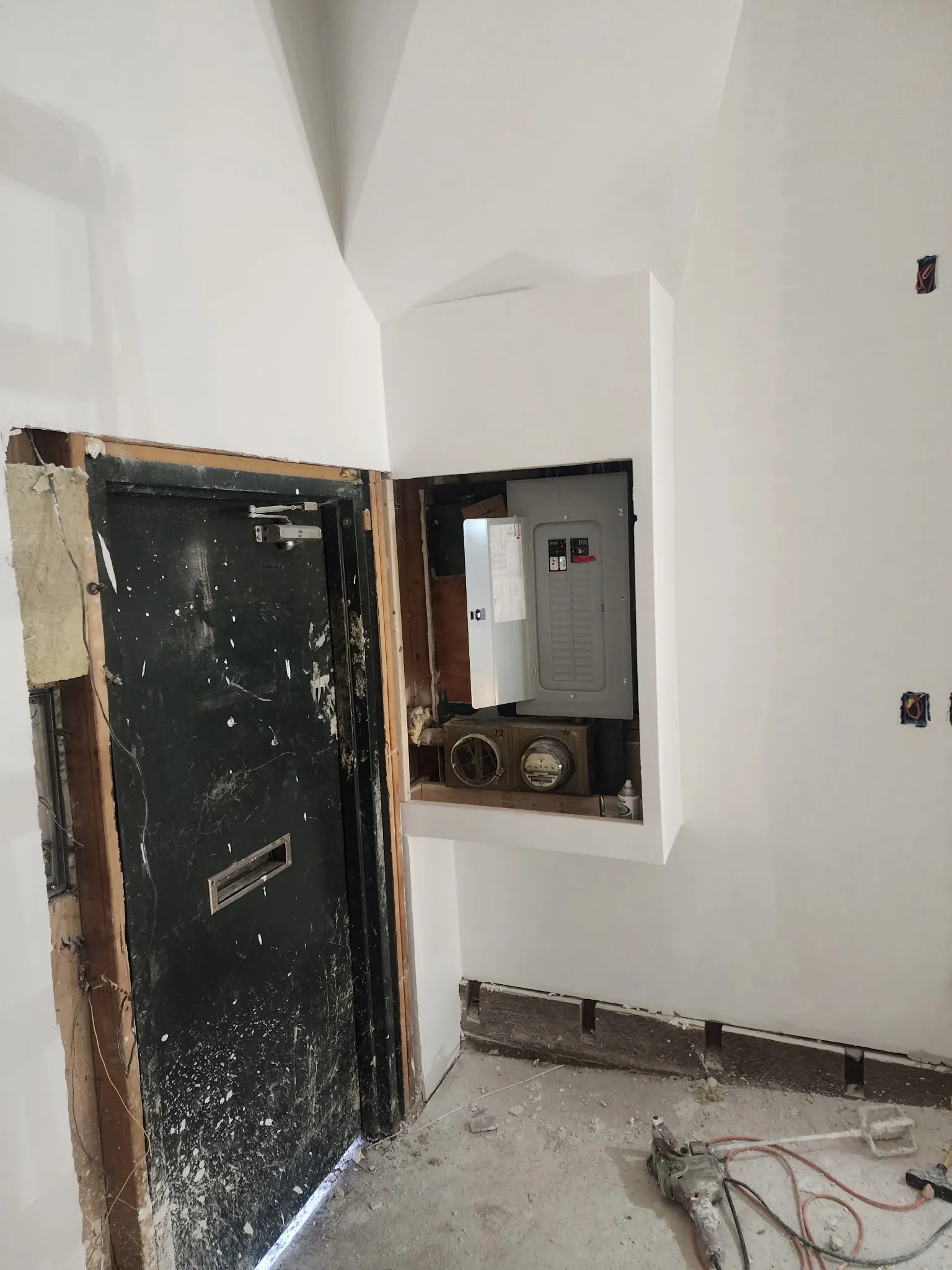
Electrical panel upgrade cost in Boston depends on amperage, the condition of the service cable coming into your house, meter socket work, and permitting — not a single flat number a company can quote over the phone. Every house is different, which is why a real number follows a real look at your panel, not a guess. For orientation: across Massachusetts, most full 100-to-200-amp service upgrades land roughly between $1,500 and $4,500, with Boston-area averages typically in the $1,700 to $2,200 range according to cost data published by Angi — and Boston’s older housing stock often pushes past those averages once service cable or meter work joins the job.
Amperage Is the Starting Point
Going from a 60 or 100-amp panel to 200 amps isn’t just swapping a box — it often means new service cable from the utility connection, a new meter socket, and enough physical room for a larger panel. A modest bump in amperage on an otherwise healthy setup costs less than a full service upgrade that touches the utility connection itself. The panel you end up needing depends on what your house actually draws today and what you want it to handle down the road — central air, an EV charger, a finished basement.
Service Cable and Meter Socket
The wire running from the utility connection to your panel, and the meter socket it passes through, often need to be upgraded alongside the panel itself, especially in houses that haven’t touched their electrical service since it was installed. If that cable is undersized or the meter socket is outdated, replacing the panel alone doesn’t solve the underlying capacity problem — it just moves the bottleneck. This is usually where a “simple panel swap” turns into a bigger job than advertised.
Permits Aren’t Optional, and They’re Not Free
A panel upgrade requires a permit and an inspection in Massachusetts, and that’s a good thing — it means the finished work gets checked by someone other than the person who installed it. Permit fees, inspection scheduling, and the utility coordination needed to safely disconnect and reconnect service all factor into the total cost and timeline. Skipping this step isn’t a shortcut; it’s a liability you inherit at resale or with your insurance company.
Condo vs. Single-Family Changes the Math
A single-family house upgrade usually means one service, one meter, one panel — contained scope. A condo unit inside a multi-unit building can mean coordinating with a condo association, working around shared electrical risers, and scheduling utility shutoffs that affect more than one household. Neither is harder in an absolute sense, but they’re different jobs with different logistics, and a quote for one doesn’t translate to the other.
Why “Cheap Panel Swap” Ads End Badly
Rock-bottom flat-price panel swap ads usually assume the best-case scenario: existing service cable that’s still good, a meter socket that doesn’t need touching, no permit complications, nothing unexpected behind the wall. Real houses, especially ones with decades of history, rarely match that assumption. The homeowner who books the cheap number often ends up paying more once the real scope shows up mid-job — or worse, ends up with work that skipped the permit and inspection to hit that price. A number that sounds too good for the scope usually is.
Get an Honest Look Before an Honest Number
The only way to get a real number is a real visit — checking the existing panel, the service cable, the meter socket, and what the house actually needs. EMC holds a Massachusetts Journeyman Electrician license (56576B) and pulls permits on every panel upgrade, so the number you get reflects the actual job, not a marketing floor. And however tempting it is to see what’s behind that panel cover yourself, a live service panel is not a DIY project — leave it to someone licensed to open it safely.