
Electrical — Knob-And-Tube Replacement
Grounded Wiring For A House That's Outgrown Knob-And-Tube
Licensed and Insured
MA Journeyman Electrician 56576B · CSL-120231 · HIC-21274.
Upfront Pricing
A straight scope and an honest price before any work starts.
Same-Day May Be Available
Same-week is normal — call for real emergencies.
What Knob-And-Tube Replacement Means
Knob-and-tube replacement means pulling out the original ceramic-knob-and-tube wiring system — still sitting behind plaster in a meaningful share of Boston's older triple-deckers — and running new grounded wiring in its place. You need it when the house is being renovated, an insurer is asking for it, or the wiring's condition simply can't be trusted anymore. Knob-and-tube has no grounding conductor at all, and its insulation has had decades to dry out and go brittle. It isn't automatically dangerous, but it wasn't built for how a modern household actually uses electricity, and that gap is what a real inspection is for.
How EMC Approaches A Rewire
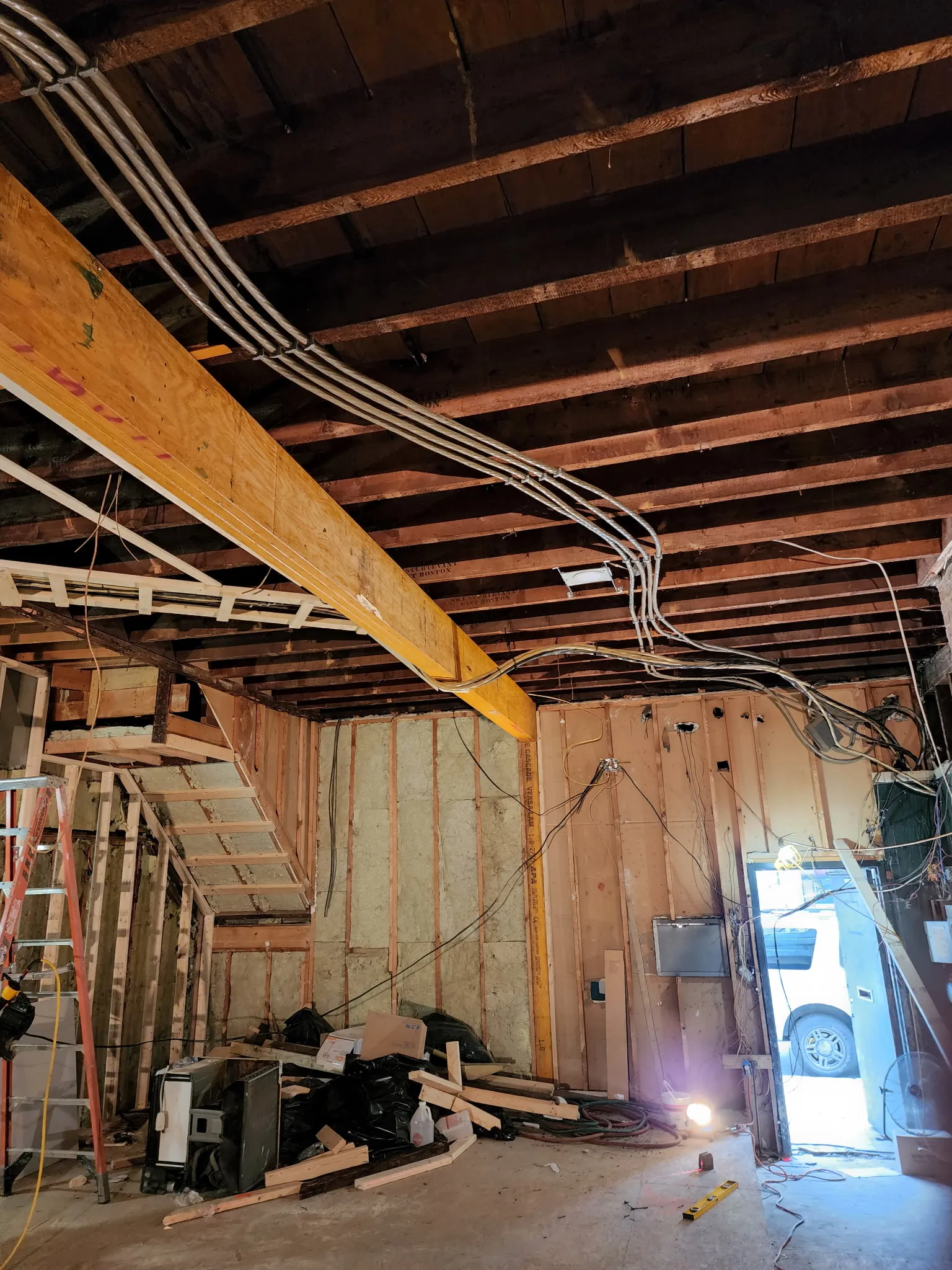
EMC pulls the permit and runs new grounded wiring to code, with the finished job inspected before it's signed off — that inspection is independent confirmation the new wiring is safe, not just our word for it. Work runs under Massachusetts Journeyman Electrician license 56576B. Depending on wall and ceiling access, some of the run can go in by fishing new wire through existing paths with minimal plaster damage; other sections need to be opened up and patched, and we'll tell you which is which before the work starts.
NEED AN ELECTRICIAN WHO CAN HANDLE ALL OF IT?
One call covers the wiring, the heat, and the whole remodel.
What Actually Moves The Price
There's no flat number for a rewire — it depends on how much of the house still has knob-and-tube, how accessible the walls and ceilings are, and whether sections need to be opened up versus fished. A house that's been partially rewired already is a smaller job than one where every room still has original wiring. Plaster-and-lath construction, common in Boston's older stock, generally costs more to access than drywall. A real number comes from a walkthrough of what's actually behind your walls, not a phone estimate.
The Insurance Angle Boston Homeowners Run Into
Many insurance carriers in Massachusetts either won't write a policy on a house with active knob-and-tube or require replacement within a set window after the policy starts. Some mortgage lenders ask about it at closing too. Whether the wiring is currently causing problems or not, the insurance and financing consequences are real — worth checking with your carrier before it becomes a surprise. Triple-deckers built in waves across East Boston and nearby neighborhoods often kept original wiring through generations of ownership, so finding it isn't unusual.
Why This Is Licensed Work, Not A Weekend Project
Knob-and-tube's lack of grounding and brittle old insulation make it genuinely unforgiving to disturb without training — a wire that looks fine can fail the moment it's touched. This is licensed electrical work with a permit and inspection at the end, not something to hand to an unlicensed handyman chasing a lower number. EMC holds Massachusetts Journeyman Electrician license 56576B and documents every rewire the way the state requires.
IN YOUR TOWN
Knob-and-Tube Replacement, Town by Town
ANSWERS
COMMON QUESTIONS
Is knob-and-tube wiring automatically dangerous?
Not automatically — plenty has run for decades without incident. The risk grows when it's been modified, buried in insulation, or asked to carry loads it was never designed for.
Will my homeowner's insurance really require replacement?
Many Massachusetts insurers either decline to cover a house with active knob-and-tube or require replacement within a set window. Policies vary — check directly with your carrier.
Do I have to rewire the whole house at once?
Not always. Some homeowners replace it room by room or floor by floor as budget allows, though a full rewire is usually more efficient than repeated partial jobs.
Can you rewire without tearing out all my plaster?
Some of it, depending on access — new wire can often be fished through existing paths with minimal damage. Other sections need to be opened up and patched. We'll tell you which after a walkthrough.
NEED AN ELECTRICIAN WHO CAN HANDLE ALL OF IT?
One call covers the wiring, the heat, and the whole remodel.